Showing posts with label Unit: Botany. Show all posts

Friday, July 20, 2012

Bark Rubbing

"Tree bark and leaves have many intersting patterns that can be collected by making rubbings."  - Science Projects and Activities page 43.

The little Lady finished up her Botany notebook well over two months ago.
Her last activity that I chose to do with her was bark rubbing. 
She compared rubbings from different trees.

Thursday, May 10, 2012

Preserving Flower Results

"What is a weed? A plant whose virtues have not yet been discovered".
                                                            Ralph Waldo Emerson

and now the results.....

She enjoyed digging for the rose.


Perfectly Preserved... yet, fairly fragile..
it felt like silk leaves....
And, "oh the smell!"
It was delightful.

The fern was dried out nicely too!

Saturday, April 28, 2012

Botany Notebook Glimpses

“Let [children] once get touch (sic) with nature, and a habit is formed which will be a source of delight through his life.” --Home Education, pg. 61

We use Apologia Science books for school. I really like how they focus on only one subject for the year. I also like that it is a conversational textbook. I use the book by reading a small subtitle each day. Then, the child does a small activity that relates to what we discussed. I would estimate that each chapter in the Apologia book has about 4 to 6 notebook pages which correspond to each chapter. It takes us no more than 15 minutes unless we are doing an experiment.  I also occassionally blog about their experiments. Often, I just make a copy of what I wrote from the blog and have them place it in their notebook.  Here is a small sample of the Little Lady's Botany book from this year so far.

                                                         Animal Pollination


Specifically Bee Pollination and Bee Vision in regards to seeing pollen
Bess don't see red they see more the ultra violet colors.

Seeds - Self Pollination Food in which we eat.

Leaves

Leaf Parts 

Roots

You can view more underneath the label "unit: botany".

Thursday, April 26, 2012

Celery Stem Absorption


 Water and minerals are transported in stems by the xylem....   water climbs up the xylem vessels....    Science on the Shelf 

While the Little Lady was doing the absorption experiment with the "Root", we started on the Stem chapter in her book as well.  This chapter's activity was to do a "stem absorption experiment". So, we used red dye for this experiment and put it on my tiny little camper counter as well. 

 Celery, red dye, water 


After 24 Hours.
She is observing the xylem -- those small little dots that carry the water up through the stem.

Carrot Taproot Absorption

 This shows you that water was being absorbed by the bottom or tip of the carrot and traveling up the inside of the carrot. This is how plants and trees get water from their roots. - http://carrotmuseum.co.uk/experiment.html

We spent some time talking about roots in Botany. So, this week the Little Lady is doing an "Absorption Carrot Taproot Experiment" and watching the water be absorbed up through the carrot root.

A carrot , water, and blue dye.


24 hours later


48 hours later
The dye was showing on the outside of the carrot in little spots all along the upper part of the carrot. .


We decided to just cut it open to see what was going on slowly with the carrot.

Monday, April 16, 2012

Preserve Flower Experiment

Flowers often whither and tend to lose their vibrant colors during the drying process. Using Borax to preserve flowers, will conserve their delicate color and prevent them from shrinking and shriveling as they do when dried in the conventional manner. - Apologia Preserve Flower


The Little Lady's Botany experiment last week was to preserve a Flower. It was a perfect time to buy roses for the camper. Always Cheerful.

This experiment had her pouring borax into a shoe box.

Then, she put the flower on top.  We chose a fern too just to see what will happen to it.


We covered it all with more borax and then taped the box up! We get to open it in two weeks.

Tuesday, March 27, 2012

Botany Kiddos Art

Flowers are without hope. Because hope is tomorrow and flowers have no tomorrow. ~Antonio Porchia, Voces, 1943, translated from Spanish by W.S. Merwin

The Little Lady's

Monday, October 3, 2011

Dissecting a Rose and a Lilly

"For most students academic learning is too abstract. They need to see, touch and smell what they read and write about." J. Goodland

The Little Lady had to dissect a rose and a lilly for Botany.
She really enjoyed it.

She put all the parts in ziplock bags.
We labeled them and then she put them in her notebook.

Tuesday, September 27, 2011

A Glimpse into her Botany Notebook pages

Writing and illustrating for their notebook employs all of the child, his memory, his creativity and the things that interested him the most about what we learned. The child remembers his work far better when all of his mind is involved in recording his learning than he does when he simply has to fill in the blank with the right answer. - Jeannie Fulbright
.

Learning about Seed Homes....
Apple and Peach
(The Knife is in the picture but she did not use it. I did!)


Peanuts


Pinecones


The Parts of a Seed -
We chose Kidney Beans


Classifying leaves as either a Monocot or Dicot


Classifying Flowers as either a Monocot or Dicot -

I had her cut out flower pictures.She had to put the Monocot flowers on the left and the Dicot Flowers on the right.  Monocot flowers come in 3's so count 3, 6, 9, and 12's  petals. Dicots Flowers come by 4 and 5 pedals.  (Count by 4's and 5's  so it can be  4, 8  and 5, 10, etc)

Bean Experiment 1 and 2

It is much better to learn the elements of geology, of botany, or ornithology and astronomy by word of mouth from a companion than dully from a book.  - Ralph Waldo Emerson

This is a small section in the Apologia Botany book that I use for introducing the Little Lady to Beans.

I read a small section out of the book each day. The Child doesn't read the section but does see the book when she is doing an activity. They narrate what they learned back to me after I read them the section.  Lastly, we do an activity that goes along with the section. Some times these activities are in the book and other times I make them up. All of the activities go into her Botany notebook. Really simple with lots of learning going on!

The Bean and how it grows...

The 1st Experiment - We soaked beans so we can open a bean to see what was inside...


Then she labled the parts ...

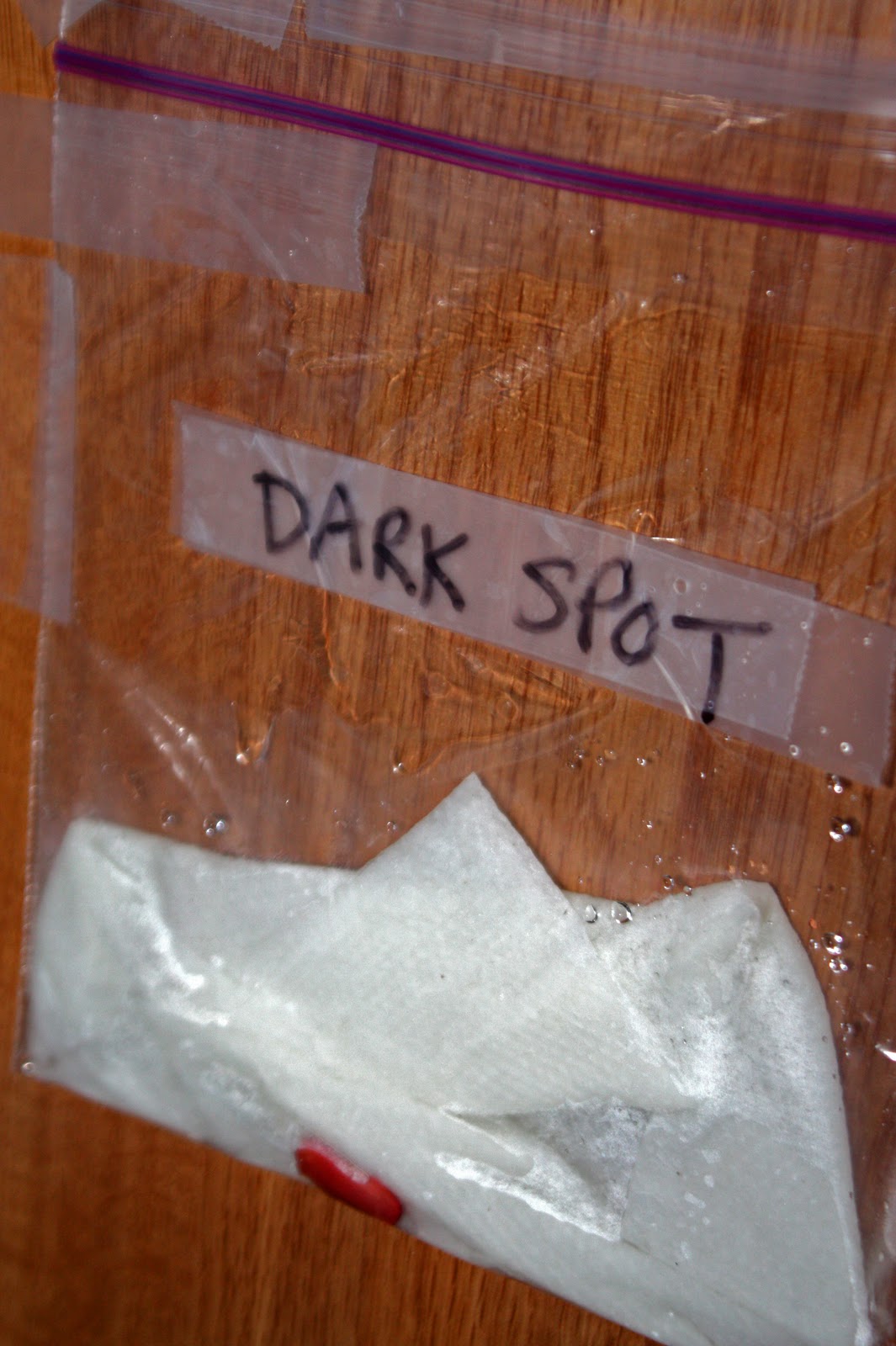
The 2nd Experiment  - We place 3 bean seeds with warm water and a paper towl into 3 ziplock bags. One went in the Window of the camper. The second is in a Dark Spot of the camper which she chose to put in her closet with no light. The third is in the Refrigerator.

She is spending 12 days charting the grown of each bag into her notebook.

Her Hypothesis is:
The Window will grow the fastest.
The Dark Spot will grow second fastest.
The Refrigerator beans will grow least.

Thursday, September 15, 2011

Pine cones and Botany

“One of the secrets of the educator is to present nothing as stale knowledge, but to put himself in the position of the child, and wonder and admire with him” - Charlotte Mason, Vol. 1, p. 54.

Today, The Little Lady and I read about Gymnosperms.She learned that Gymno means uncovered and sperm means seed. We discussed the Coniferaphyta of the Gymnosperms. Conifer means cone bearer and phyta means plant.

So, she went around gathering cone bearing plants such as pine cones for a camp fire. 


The Little Lady also worked in her Botany journal.
She drew her idea of a Pine Tree with a pine cone.

Earlier, Beloved shared with her one of his many survival know hows that he gets from all of his survival training.

You take an unopened pine cone...

Pull it apart piece by piece...

(This was a little hard for her since the bottom of it hadn't been slightly tapped into by a squirrel)

Pull it back to expose the little seed. 

The seed is the grayish-black item on the bottom.

Then, you pop it in your mouth for a little nutrition.

Although, you couldn't live off of it!

Beloved popped it in his mouth. Later, she did too.
Beloved says, "It always just taste like bark."  
I took his word for it.

She will be putting pine cone seeds in a Ziploc bag and then taping it in her journal too.
Botany will be loads of fun for her out here at the camp ground that we are staying in for several months.

Saturday, July 2, 2011

Painting with Blueberries

Early American colonists made grey paint by boiling blueberries in milk. - Blueberry Facts

Barren River Lake State Resort Park in Kentucky

All week the State park has had activities for the Children every 2 hours. So, we did several of them which were being hosted by the volunteer college-age rangers that come to work for the summer.

This activity showed how a person could use flowers, berries and leaves to get color from natural ingredients.
This first part of this particular activity was collecting berries and leaves while on a hike.

The second part was to crush them up so they can have a hand-on lesson in how the natives and early Americans used berries and leaves for dye to paint their belongings.


Beloved is helping with the crushing up of the blackberries and the blackberries that were not ripe so we could have purple and red dye.


All the Little Miss wanted to do was eat the blackberries!

But, once every thing was mashed the painting began...